Wednesday, October 21, 2009

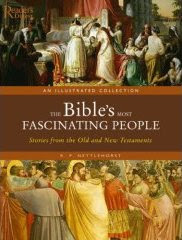
Japanese Edition of The Bible's Most Fascinating People


The Japanese Version of my book was just released. You can see it at the Japanese version of Amazon.com.

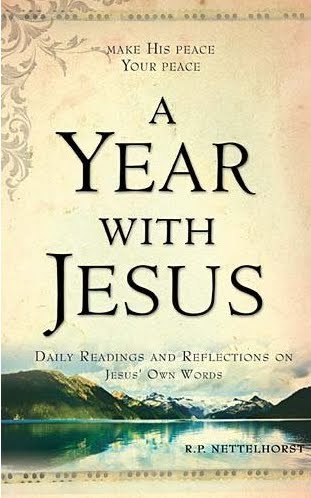
And I continue working on my other writing projects. I just turned in the first third of a devotional book to my editor today. I hit my deadline. The next third is due November 18 and the entire book will be due on December 23. Then I'll get to work on the sequel. My first deadline for that is February 22, 2010.

Then there is the book I'm doing for my London publisher...

Friday, August 07, 2009

The Worst of All Possible Worlds?

That the world is an evil place seems self-evident to many people. They demonstrate it by simply pointing to the latest headlines of war, crime, disaster, racism, and worsening test scores. Pundits warn us ominously that America is running higeldy pigeldy down the road to Hell.

But is this negative perception, fueled by endless news accounts of horrible things, an accurate one? Is life barely more than miserable? Let’s consider.

An article in a recent Scientific American indicated that at any given moment, 93 percent of the world’s human beings feel happy about their lives as a whole. These percentages of happiness remained constant regardless of income, education, or the place individuals happened to live. If things are as bad as everyone suggests, then how could this be? But think about your own life. Are you planning on slitting your wrists as soon as you finish reading this article? Probably not. Chances are, you’re pretty comfortable and generally content just now. Think you’re unique? Think again.

The world’s population stands at about 6.3 billion. Many think this is a bad thing and moan endlessly about the population explosion. But stop and ask a simple question: why are there so many people? Was sex really invented in the 60s? Have birth rates skyrocketed? Not at all. Birthrates are actually declining. So the question remains: why so many human beings?

Because not so many people are dying!

Human life expectancy in 1800 was 40, while the world population was only about 900 million. Infant mortality was rampant. Disease proliferated. Starvation was common. Since then, life expectancy has nearly doubled, and the population has skyrocketed as a consequence. According to CIA statistics recorded in the CIA World Factbook, less than 0.9 percent of the world population died last year. That’s less than one percent. That’s from all causes. Or to put it another way, a bit more than 99.1 percent of the human race didn’t go to their graves last year.

So let’s consider some obvious implications.

The number of people who have died this year because of crime? Less than one percent of the human race.

The number of people who have died because of natural disasters? Less than one percent.

The number of people who have died because of terrorism? Less than one percent.

The number of people who have died because of starvation? Less than one percent.

The number of people who have died because of diseases? Less than one percent.

The number of people who died as a consequence of war? Less than one percent.

Statistics like those would seem to demonstrate that the world’s not quite so awful as the nightly news would like us to believe. (Stopping to consider the last time one heard of a life insurance company going bankrupt might be another bit of evidence.)

Certainly there is suffering and evil and doubtless the headlines on today’s paper are filled with ugly information. But the real reason the news is almost always bad is because bad is unusual and newspapers and television are interested in novelty.

Consider: do the newspapers or television report on the millions and millions of people who went to work today, did their jobs, came home, kissed their spouses and children and had a quiet evening? Of course not. That would be boring. Instead, they’ll report on the single whacko who went to his job and machine-gunned all his coworkers. Now that’s interesting.

Humanity is warlike and violent, right? Then why, according to the CIA, is only two percent of the world’s gross economic production devoted to defense spending? That means that ninety-eight percent of what the world spends its money on each year is for stuff other than making guns and bombers.

For much of human history, human beings spent a lot of time concerned about having enough food to eat. Famines were common. People regularly worried about whether they’d be able to eat today. Now, the biggest health concern in the United States is obesity. We have so much food that we have to spend gobs of cash on fancy ways to lose the extra weight it puts on our bodies.

In 1804 the former Secretary of the Treasury, Alexander Hamilton was shot to death in a duel with the Vice President of the United States, Aaron Burr. In the twenty-first century, commentators become apoplectic when the Vice President says a bad word to a political opponent. They bemoan the loss of civility in political dialogue. I don’t know about you, but if the worst thing a politician does now is call his opponents “girly men,” we have little to complain about.

Hard as I try, I have difficulty thinking that this is the worst of all possible worlds, or that the world is getting worse and worse. Quite the opposite. Take a break from the nightly news. Go outside, notice the blue sky and green grass. Take a deep breath. Relax. Put things in perspective. Then smile.

The Good Old Days

Ah yes, the good old days, they were so lovely. A trip to the dentist with no anesthetic while he drilled and poked. What memories that brings back! A world without antibiotics, when a scratch could kill you. The good old days, without inoculations, when millions suffered or died from what are now preventable diseases. The good old days, when horse manure filled the streets and flies spread illness, when water was not safe to drink so people all had to all drink beer—but since there were no refrigerators, it was warm.

The good old days, when hurricanes came without warning because, without satellites, no one could see them building in the Atlantic weeks ahead of time. The good old days when the news from across the country took a week to get to us, when communicating with a loved one meant waiting weeks for a letter. Ah, the good old days when people spent three weeks crossing the Atlantic at the mercy of winds in a tiny boat. The memories! When life expectancy was but 45, and 40 percent of children died before their fifth birthday.

The good old days when instead of worrying about obesity people worried about famines and starving to death. The good old days, when doctors did more harm than good. The good old days?

The Good Old Days—They Were Terrible is an interesting book written by Otto L. Bettman. Originally published in 1974 by Random House it is still available today. In it, he describes the way things really were in the relatively recent past. Given how much criticism is commonly thrown at schools today, it is intriguing to discover what Bettman has discovered about schools of the past. In his book he writes, “Criticism of the public school system…usually takes the form of nostalgia for its ‘Golden Age,’ the days of the Little Red Schoolhouse. Here, it is believed, was the wellspring of the nation’s greatness, where the three R’s were taught in an atmosphere of patriotism and simple virtue, where individualism was sanctified….In a time of widespread educational hysteria it is a vision hard to resist; however, it is not an accurate one.”

He reports, in contrast to the rose-colored memories:


“…the teacher was more warder than instructor, his routine being more physical than intellectual. Some school boards in selecting a new teacher made it a rule to pick a strong fellow—especially on the frontier, where, according to Hamlin Garland, ‘baseness and vulgarity’ prevailed among the older boys. Biting, eye-gouging and slug scuffle matches were favorite sports, but boys saved their most barbaric excesses for strangers….a Miss Barstow, taught public school in Canton, Mass. On October 8, 1870, the young woman, said to be in feeble health, punished four boys for unruly conduct by shutting them in the school building after class was out. Finally, when she released them, Miss Barstow is said to have given the boys ‘a slight reprimand.’ Their response was immediate; they stoned her to death.”


Bettman demonstrates that the extent of education in the not so distant past was remarkably poor. He relates that in 1890 barely twenty percent of all African-American children received any education at all, and that education, for those twenty percent who were lucky enough to get it, amounted on average to about 100 days worth of instruction. One might be tempted to imagine that such poor education was something only minorities suffered from in the past. Not at all. City schools, according to Bettman, were routinely plundered by political bosses, who packed school boards with their own cronies. The result was schools that were overcrowded and under funded, where many teachers were doing well just to maintain order. The New York commissioner of education admitted in 1871 that “thousands of children leave school without being able to read or write.” And the percentages of those who even went to school to begin with was not high, especially among the poor and immigrant groups, who, despite compulsory education laws, tended to keep their children at home so they could work.

Bettman demonstrates that many of the problems facing the world today—education being just one of his examples— are problems that it has faced all along. In many, many respects, conditions are either unchanged or actually considerably better today than they were in the supposed “good old days.”

In the Los Angeles Times I’ve read opinion pieces, as well as seen reviews for books, such as We Are Now Beginning Our Descent, by James Meek, which argue that the West, and America in particular, are in their twilight years and face inevitable decline. What startles me in such pieces is the remarkable historical amnesia, since the chattering classes were saying much the same thing in the years between the first and second World Wars. Otto Spengler, a German scholar, had quite a hit on his hands when he wrote his book, The Decline of the West, published in two volumes in 1926 and 1928.

Remarkably, the West somehow managed to not just survive Spengler’s critique, depression, world war, and a cold war, but to prosper and even expand its influence, much to the disappointment of pessimists everywhere. Given the pattern of history, I’m always puzzled by those who imagine that the world is getting worse and worse, or predict the worst possible outcomes. But then most people don’t pay much attention to history.

Tuesday, August 04, 2009

Astronomy picture of the day


NASA offers an astronomy picture of the day every day, at Astronomy Picture of the Day. Today's was very odd as it shows three suns rising over Gdansk, Poland.

Chances for Peace

Interesting article at Slate.com by John Horgan arguing that war may not forever be a part of human society:

A recent decline in war casualties—especially compared to historical and even prehistorical rates—has some scholars wondering whether the era of international war may be ending.

Counting casualties is fraught with uncertainty; scholars' estimates vary according to how they define war and what sources they accept as reliable, among other factors. Nevertheless, a clear trend emerges from recent studies. Last year, 25,600 combatants and civilians were killed as a direct result of armed conflicts, according to the 2009 Yearbook of SIPRI, the Stockholm International Peace Research Institute, to be released Aug. 17. Two thirds of these deaths took place in just three trouble spots: Sri Lanka (8,400), Afghanistan (4,600), and Iraq (4,000). In contrast, almost 500,000 people are killed each year in violent crimes and well over 1 million die in automobile accidents.


If nothing else, it does put things in perspective a bit and points out that really, things are not getting worse and worse.

Monday, July 20, 2009

Money for the Soul

According to the United States Federal government, the Gross Domestic Product of the United States for 2005, for instance, was a bit over twelve trillion dollars. The Federal government will spend nearly two and a half trillion, or about twenty percent of that.

What did the government spend money on? Nearly $402 billion was spent on defense, and $28 billion on Homeland Security. $510 billion went for Social Security, $290 billion to Medicair and $180 billion to Medicaid and the State Children's Health Insurance Program. $57 billion was spent by the Department of Education. The Department of Health and Human Services spent more than $68 billion. Almost $30 billion was spent for Veterans Affairs. The Justice Department spent about $19 billion dollars.

Each year, according to Worldwatch Institute, Americans and Europeans spend about $15 billion a year just on cosmetics. They also spend nearly $17 billion a year on pet food. Going to the movies? Americans drop about $10 billion annually.
All this may help put something in perspective. I run across people who believe that the money spent by NASA is a complete waste. “Why spend billions going to the Moon and Mars when we have poor people that need our help?”

Do you know how much the U.S. government will actually spend on NASA in 2009? About $16 billion, which is a billion less than what Americans will spend on pet food. NASA’s piece of the federal pie is actually less than one percent of the Federal budget. Already, more than thirty percent of the US budget is devoted to caring for the poor and suffering.

Let’s put all this in a way that might be easier to comprehend. If your annual income is $36 thousand, then one percent of your annual budget works out to three hundred sixty dollars: about thirty bucks a month.

What a spendthrift you are if you spend that going out to dinner and a movie each month! Why aren’t you donating that windfall to the poor!

Incidentally, if we add up the money that the US population spends on just video games and movies combined, it adds up to about what’s being expended by the space program each year. The sixteen billion dollars that NASA will spend in 2009 works out to about 64 dollars a year for each person in the United States. Only $5.34 per month.

So ask yourself: do you think that trips to Mars are worth $5.34 a month? How much do you spend each month for your cable or satellite TV? How about for cookies?
And remember, it’s thanks to that NASA budget that you have that TV signal beaming into your house while you munch on those cookies. How about the other stuff that the space program has given you in your daily life that you take for granted, like accurate forecasting of hurricanes, instantaneous communication, and the navigation by the Global Positioning Satellite system that guides planes, ships, and smart bombs? Then there are the medical advances we could discuss, like MRIs and medical monitoring, all thanks to that $5.34 a month.

But even if there were no practical benefits, I think going to Mars is worth at least $5.34 a month. There is, after all, more to life than just the practical. It isn’t all just about giving money to the poor. If we do not leave ourselves room for art, for music, for scholarship, and for all the rest that inspires, then haven’t we become even poorer than the poorest outcast? Would the critics of the space program suggest no money be devoted to art, to movie making, to music and books, until we take care of all those who are hurting? Do we cast stones at writers who spend all that time creating novels when they could be devoting their days to volunteering in a homeless shelter?

Those who think the space program is a waste of money haven’t thought things through very well. This isn’t an either/or situation. Those who decry money spent on space are spouting clichés that may sound compassionate, but in the final analysis are just silly or worse. They rob us of our souls. When the philanthropist Ruth Lilly in 2002 gave approximately $100 million to the Modern Poetry Association, which publishes Poetry Magazine, most people thought it wonderful. But some critics complained that the money “could have been given to the poor.” Of course, Judas voiced a similar complaint when a young woman poured expensive perfume over Jesus.
Frankly, I worry about people who think giving money for poetry a waste, just as I worry about those so earthbound they never bother to look up and wonder about the stars.

Why Space?

Stephen Weinberg, a Nobel winning physicist, is reported to have stated that “the whole manned spaceflight program, which is so enormously expensive, has produced nothing of scientific value. Human beings don't serve any useful function in space.” Although he is a brilliant physicist, his statement, if accurately reported, is remarkably ignorant regarding the scientific contributions of human space travel. Over seven hundred pounds of rocks brought from the moon, among other bits of science that came from the manned missions to the lunar surface, doubtless contributed something to science. The Hubble Space Telescope has had some scientific value, I think most people would agree. But if it weren’t for people in space, there would be no Hubble Space Telescope. People carried it into orbit aboard a space shuttle and have repeatedly had to fly up to repair and refurbish it. The Hubble wouldn’t have been launched, and it would have broken down and burned up in the atmosphere years ago, if it weren’t for the manned space program.

So an obvious value of the space program over the last fifty years is the science that has been produced, both by human crewed vehicles and the many robotic space probes that have flown. But a question many others still have is this: has the space program benefited ordinary people who aren’t interested in science? Has all that money poured into the cosmos done any earthly good?

Certainly. There are many things that we use every day that wouldn’t exist apart from space (and I’m not talking about Tang and Velcro): communication satellites that transmit telephone, radio, and television signals instantly to any part of the world. Military reconnaissance satellites mean that our enemies can run but they can’t hide. Weather satellites allow us to see storms approaching, so that hurricanes don’t hit without warning. Other satellites allow the creation of maps of incredible accuracy, show us resources like oil, gas, and minerals, monitor arable land, pay attention to the ozone layer and any number of other environmental details. Global positioning satellites help guide aircraft, ships and truckers, as well as hikers and commuters. Satellite radio beams commercial free music and entertainment to our cars and homes. Satellite TV is ubiquitous and popular—and even if you have cable TV, your cable company depends on satellite transmissions to get all those channels to you. Then there are the spin-off technologies, ranging from modern electronics, computers to photo enhancement technology.

Then there are the intangibles that we have gotten from space: the wonder of seeing the earth from the moon; the impact those views have had on how people perceive of themselves in the universe. The desire for conservation and responsible use of the environment has been influenced by seeing the world as a tiny, fragile object in an otherwise very hostile universe. Then there’s the joy of exploration, scientific discoveries and data.

It is, of course, impossible to predict what the space program may still bring us in the future, since it is impossible to predict the future with any degree of accuracy. But given the benefits the first fifty years have given us, is it unrealistic to imagine that the future will also bring us tangible benefits from space as well?

Robert Heinlein wrote, “It’s not good for the human race to keep all its eggs in one basket.” Stephen Hawking, the noted physicist, echoes this sentiment, arguing that human colonization of other worlds is important to insure the survival of the human race.

There are potential economic benefits: raw materials, trade (once colonies are established), energy (power satellites, Helium 3). What is the gross domestic product of planet Earth? What possible benefits could we see having another world, with its own economy? Can we predict the future gross domestic product of other worlds? What will mining the asteroid belt do to the economy? What shortages can be relieved or eliminated all together?

The Gross Domestic Product of the United States according to the CIA World Factbook for 2004 was 11.8 trillion dollars. Of that, about 16 billion was spent by the U.S. government on the space program. That amounts to 0.14 per cent of the GDP spent on space. By contrast, that means 99.86 per cent of the GDP was spent on other stuff. For those who complain that we should focus our attention on the poor or whatever their favorite concern might be, I would suggest that indeed our focus is on the poor and all those other things. Let’s put it another way. 54 dollars of your taxes that you paid this year went to the space program. Chances are you spent that much going out to dinner just once.

Since NASA began in 1958, the United States has spent, based on the current value of the dollar, 419 billion dollars on space. In contrast, just in the year 2007 alone, the United States will spend 456 billion dollars on the war in Iraq—enough to fund NASA at it’s current annual budget of 17.3 billion dollars for the next 26 years. The total United States government budget for 2007 was 2.8 trillion dollars. Of that, 586.1 billion went to Social Security. 394.5 billion for Medicare. 367 billion for unemployment and welfare. 276.4 billion for Medicaid and other health related benefits.

Weinberg, and those like him, have an opinion. But, as Douglas Adams, the author of the humorous science fiction novel Hitchhiker’s Guide to the Universe wrote, “All opinions are not equal. Some are a very great deal more robust, sophisticated and well supported in logic and argument than others.”

40 Years Ago

Forty years ago today I was in Ohio. In a bit more than a month, I was going to be going to junior high for the first time. And my dad would be leaving to go to Viet Nam for the second time (he was career Air Force). On the night of July 20, 1969 we all gathered around the television and watched Neil Armstrong and Buzz Aldrin step out of the lunar module to walk around on the moon. For my parents, the thing that amazed them most about the event was the fact that we were watching it happen on live TV--that NASA could actually broadcast the signal all the way back from the moon. Recall that it had only been seven years previously that the first relay style communications satellite had gone into orbit. Before that, it hadn't even been possible to get live TV signals from Europe. Only seven years later, we were seeing live TV from the moon!

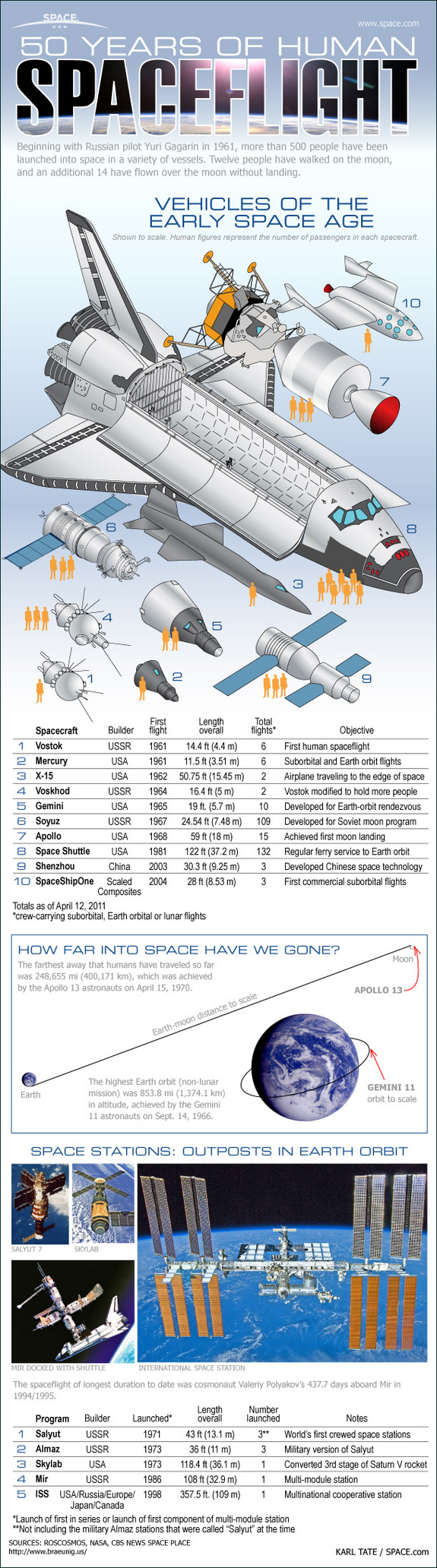
John Glenn had become the first American to orbit the earth in 1962. Seven years later, Americans were walking on the moon. That was 40 years ago. The last time Americans--or anyone--strolled on the moon was December, 1972. Nearly thirty-six years ago. In that time, we've sent probes to all the planets in the solar system. Three satellites and two rovers are currently at Mars. Casinni circles Saturn. MESSENGER is nearing orbit of Mercury. A European satellite orbits Venus. And thirteen people are now aboard the International Space Station, the largest space craft ever obrited, with an internal volume equal to a large four bedroom house.

Friday, July 17, 2009

Shuttle Docks with the International Space Station

Space Shuttle Endeavour docked today with the International Space Station. For about the next two weeks, the station will be host to 13 people, a new record for the number of people on one spacecraft.

MSNBC has a much speeded up video of the docking today:

Thursday, July 16, 2009

Restored HD Versions of Live TV From First Moon Landing

The images beamed live from the moon on July 20, 1969 that we saw on TV were rather poor quality because the video was incompatible with broadcast equipment of the time. So they aimed a TV camera at the monitor and broadcast that. Ugh. Then the original tapes were mislaid for the last 40 years or so. NASA has been looking for them for a few years now and recently found them. You can now see what the broadcast video would have looked like had broadcast technology been up for the task back in 1969. Of course, it's still black and white and still not anywhere close to the quality we can get with modern cameras. But its a heck of a lot better than what we've seen up til now.

Go to NASA.gov.

Wednesday, July 15, 2009

Video of Space Shuttle Endeavour Launch

Here's video of today's Space Shuttle Endeavour launch:

Shuttle Endeavour Finally Launches

The Space Shuttle Endeavour took off today at 3:03 PM Pacific Time and is safely in orbit. The weather was finally good enough. There are 7 astronauts onboard the shuttle and 6 on the International Space Station. So that ties the record number of human beings that were in orbit at the same time (previous times that there were 13 people in space were 1995, 1997 and March 26, 2009, when there were 3 aboard a Soyuz, 3 on a space station and 7 on the shuttle). So this is the first time there have been 13 in space aboard only two spaceships. After the shuttle docks with the ISS in three days, that will set a new record for the greatest number of people aboard a single space vehicle, when all 13 people will be in the International Space Station at the same time.